

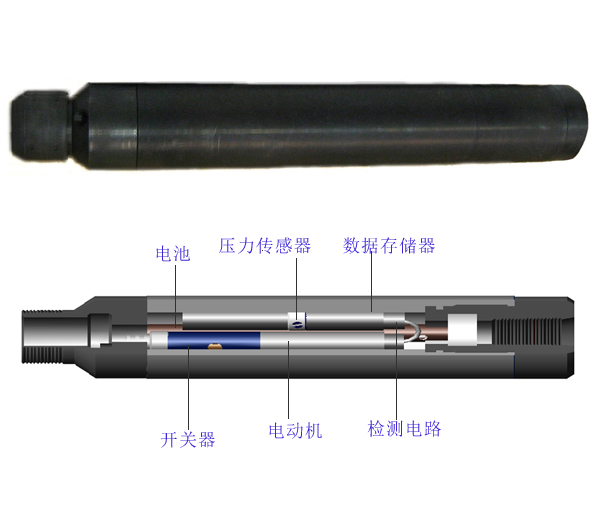
Product Name
Intelligent Separated Zone Oil Recovery Tool
Model Specifications
114-38-35A; 114-38-35C
Product Overview
The YKKG tool series was developed to address the complex production conditions common in mature, high-water-cut fields, including multiple water-producing zones, zones with high water cut, ineffective circulation zones, and inter-zone channeling. These conditions can reduce the accuracy of water-identification and injection-profile tests, make inter-zone conditions difficult to interpret, and produce ambiguous flow evaluations. This complicates the selection of candidate intervals and production-adjustment plans, as well as the prediction of treatment results. Protected by a national patent, the tool works with packers to identify and shut off water in a single trip. It simplifies complex well conditions and can support water identification, water shutoff, production, and zonal allocation in one run. It is compatible with multiple packer types and tubing configurations. In normal operation, a surface pressure line connects to the casing wing valve on the wellhead tree. Changes in casing pressure and their duration form coded commands that control the downhole production valve. Flow through each interval can be adjusted as needed, with a resolution of 2%.
Detailed Introduction
The tool consists of a battery pack, control circuit, electric actuator, valve-positioning system, pressure sensors, adjustable choke, and mechanical housing. During operation, a surface pump truck applies a programmed sequence of pressure increases and decreases to the wellbore, creating a specific pressure code. The control circuit interprets the command and drives the adjustable choke to close or change its opening.
The tool series supports a wide range of applications and can be run with different completion and tubing configurations.
1. Water Identification and Shutoff with a Releasable Production String
Open the downhole control valves one interval at a time. Identify water-producing intervals through annulus testing or by measuring production at the surface and collecting samples. Determine each interval’s total-fluid, oil, and water rates and water cut, then shut off ineffective circulation zones and intervals with very high water cut. This method is suitable for deviated and horizontal wells.
2. Water Identification and Shutoff with a Zonal Isolation String
Position the control tool below the packer. Open the tool for one interval and conduct a production test; surface measurements of fluid and oil rates help identify intervals to shut off and intervals to produce. To speed up the treatment plan, intervals can also be opened sequentially, with production measured and samples analyzed for water cut. This method is suitable for deviated and horizontal wells.
3. Applications in ESP and Screw-Pump Wells
Run the control tools and packers according to the approved geological program, then open and test each interval in sequence. Measure fluid production at the surface and determine water cut from samples or by gravity separation in a calibrated container. During production, interval flowing pressure can be recorded; after shut-in, static pressure can be measured at different depths. With insertable pressure gauges, zonal flowing and static pressures and pressure-buildup curves can be obtained, addressing the difficulty of acquiring interval pressure data in ESP and screw-pump wells.
4. Applications in Well Testing and Production Testing
The tool allows the target interval to be opened when required, reducing repeated tubing trips, saving time, and lowering labor intensity.
Used with insertable pressure gauges and a command-pressure telemetry gauge, it can record whole-well flowing and static pressure-buildup curves as well as pressure data and buildup curves for individual sub-layers.
Pressure responses under different operating conditions can be used to estimate productivity and skin factors.
During production testing, flowing-pressure curves can be recorded throughout the test, with static-pressure measurements scheduled as needed.
Technical Parameters
| Parameter | 114-38-35A | 114-38-35C |
|---|---|---|
| Working Pressure (MPa) | 35 | 35 |
| Operating Temperature (°C) | 80 | 120 |
| Total Tool Length (mm) | 1240 | 1240 |
| Maximum Outside Diameter (mm) | 114 | 114 |
| Continuous Operating Time | ≥2 years | ≥2 years |
| Minimum Inner Diameter (mm) | 38 | 38 |
| End Connection Threads | 27/8 EUE (NU) | 27/8 EUE (NU) |
| Applicable Vertical Well Depth (m) | ≤3500 | ≤3500 |
| Initial State | Check valve fitted / closed (optional) | Check valve fitted / closed (optional) |
Technical Advantages
- Easy to operate and reliable in use, significantly shortening the time required for field operations.
- Supports automatic, scheduled opening and closing.
- Easy to control, with low operating costs and short operating time. Frontline personnel can therefore adjust production wells promptly and accurately according to each target well’s production.
- A single tubing trip can perform zonal oil production, zonal well testing, zonal water identification, water shutoff, production, and production allocation. For zonal oil production, the main objective is to shut off water-producing zones and open oil-producing zones.